Bariatric & Specialist Transport
Safe, Dignified Transport for People Who Need Extra Space and Support
Some people require larger vehicles, reinforced equipment or more complex transfer planning to travel safely. Bariatric & Specialist Transport is designed for individuals whose weight, mobility or clinical needs mean standard vehicles and stretchers are not appropriate. UK guidance on non‑emergency patient transport highlights the importance of tailored provision for this group to protect dignity and reduce risk.
Who This Service Is For
This service is suitable for children, young people and adults who:
- Live with obesity and require bariatric‑rated stretchers, wheelchairs or seating.
- Have limited mobility or are largely bed‑based and need careful moving‑and‑handling plans.
- Need to travel with specialist equipment, such as certain respiratory or positioning devices.
- Have been advised by clinicians that standard transport is unsafe or uncomfortable.
Commissioners, hospitals, community teams and care homes often use this service for planned admissions, discharges and specialist appointments.
Types of Journeys We Support
In line with non‑emergency and specialist ambulance practice, we support a range of planned journeys, including:
- Bariatric hospital appointments, investigations and procedures.
- Transfers to and from specialist clinics or weight‑management services.
- Planned admissions and discharges involving reinforced beds or equipment.
- Moves between hospitals, community hospitals, rehabilitation units and care settings.
Each journey is individually risk‑assessed, factoring in access, lifting routes, staffing levels, equipment and travel time.
In line with non‑emergency and specialist ambulance practice, we support a range of planned journeys, including:
- Bariatric hospital appointments, investigations and procedures.
- Transfers to and from specialist clinics or weight‑management services.
- Planned admissions and discharges involving reinforced beds or equipment.
- Moves between hospitals, community hospitals, rehabilitation units and care settings.
Each journey is individually risk‑assessed, factoring in access, lifting routes, staffing levels, equipment and travel time.
Trained Staff and Moving‑and‑Handling Safety
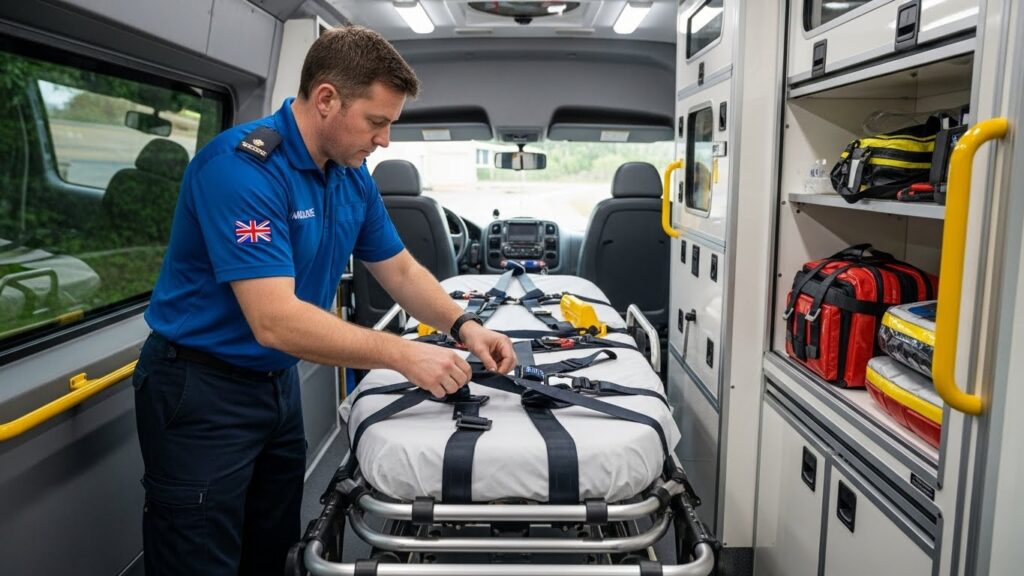
Evidence and clinical guidance underline that poor manual handling can cause harm to both patients and staff, especially in bariatric care. Our teams are trained in:
- Bariatric‑specific moving‑and‑handling techniques and use of equipment.
- Working as a coordinated team with clear roles and communication.
- Respecting privacy and dignity during transfers, including use of screens and appropriate clothing.
- Recognising fatigue, breathlessness or pain and adjusting pace accordingly.
We always aim to minimise the number of moves (for example, bed‑to‑stretcher‑to‑bed only) and avoid unnecessary repositioning.
Dignity, Privacy and Respect
People who require bariatric or specialist transport can feel anxious about stigma, visibility and loss of control. Professional bodies and patient‑experience reports stress the need for respectful, non‑judgemental practice.
In our service, this means:
- Using neutral, respectful language and involving the person in decisions about their journey wherever possible.
- Ensuring vehicles are clean, comfortable and appropriately equipped.
- Limiting bystanders during transfers and keeping doors or curtains closed when safe to do so.
- Listening to feedback and adjusting our approach to improve comfort and confidence.
How to Arrange Bariatric & Specialist Transport
Because these journeys are more complex, we gather detailed information before confirming a booking. Many systems expect such transport to be requested by hospitals, community teams or commissioners, and we can work within those arrangements.
When you contact us, please be ready to share:
- Height and approximate weight, if available, or confirmation that bariatric equipment is required.
- Mobility level (bed‑bound, assisted transfers, able to stand briefly, etc.).
- Details of current equipment (bed type, mattress, hoists, chairs) and what must travel with the person.
- Access details at both locations (stairs, lifts, door widths, parking).
- Any respiratory or clinical issues that may affect positioning or journey length.
Our team will review the information, advise whether we can safely support the journey, propose staffing and equipment, and provide a clear quote or commissioning pathway.